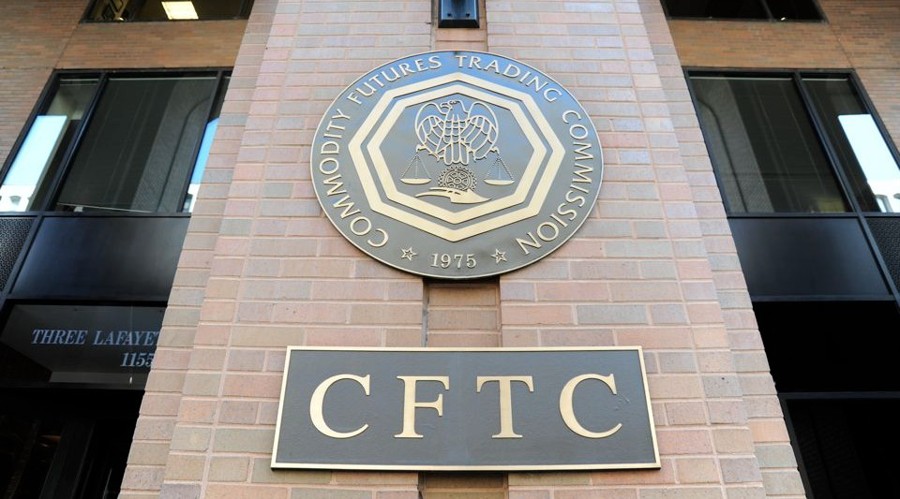
The Commodity Futures Trading Commission has updated its digital-asset guidance to clarify that regulated derivatives firms can invest customer funds in tokenized versions of permitted assets and use blockchain technology to satisfy regulatory recordkeeping requirements.
The CFTC’s Market Participants Division, Division of Market Oversight and Division of Clearing and Risk published the updated guidance on September 24, expanding a set of crypto and blockchain frequently asked questions originally released in March. The update addresses two increasingly important questions for regulated derivatives markets: whether tokenizing an otherwise permitted investment changes its regulatory treatment, and whether records maintained through distributed-ledger technology can satisfy existing CFTC requirements. Chairman Michael Selig said the revisions were consistent with the agency’s effort to provide greater regulatory clarity for the crypto industry.
Tokenization Does Not Automatically Change the Asset
The customer-funds clarification could be particularly important as traditional financial assets increasingly move onto blockchains. CFTC rules strictly control how futures commission merchants and derivatives clearing organizations can invest segregated customer funds. Regulation 1.25 permits specified categories of relatively conservative investments, subject to safeguards designed primarily around preserving principal and maintaining liquidity. The latest guidance clarifies how those requirements apply when a permitted investment is represented in tokenized form.
That does not mean customer money can now be freely invested in any cryptocurrency or tokenized asset. Instead, the underlying investment must already qualify under the CFTC’s permitted-investment framework and continue satisfying the applicable regulatory requirements. The distinction reflects an increasingly technology-neutral approach: representing an eligible financial asset on a blockchain does not necessarily change its underlying regulatory characteristics.
The clarification builds on the CFTC’s broader push toward tokenized collateral. Staff guidance issued in 2025 addressed the use of tokenized non-cash collateral, while subsequent no-action relief allowed futures commission merchants under specified conditions to accept certain non-security digital assets, including qualifying payment stablecoins, as customer margin collateral.
Blockchain Records Can Meet Existing Requirements
The second change concerns recordkeeping. CFTC staff clarified that regulated entities can use blockchain technology to satisfy recordkeeping obligations, provided the resulting records continue meeting the substantive requirements imposed by CFTC rules. That could remove an important source of uncertainty for exchanges, clearinghouses, futures commission merchants and other registered firms considering distributed ledgers for operational infrastructure. Blockchain systems can provide timestamped and auditable transaction histories, but regulated firms remain responsible for ensuring records are complete, accessible and maintained in accordance with applicable retention and production requirements.
The September update therefore does not eliminate recordkeeping obligations. It clarifies that the technology used to maintain compliant records does not have to be a conventional centralized database. The move fits a broader shift underway at the CFTC under Selig. On September 22, the chairman said the agency was preparing U.S. markets for greater adoption of blockchain and artificial intelligence, including mass tokenization, onchain finance and continuous trading. The agency has separately expanded its work on stablecoin collateral and crypto derivatives. The latest guidance moves some of those ambitions from policy language into practical compliance.
For financial institutions, the significance is that blockchain infrastructure increasingly does not require an entirely separate regulatory framework simply because the underlying assets or records exist onchain. The CFTC is instead signaling that existing customer-protection and recordkeeping standards can, in certain circumstances, be applied directly to blockchain-based infrastructure. That approach could make it easier for regulated derivatives firms to adopt tokenized securities, funds and other eligible assets while moving more of their operational records onchain — without waiting for regulators to rewrite every rule around the technology.