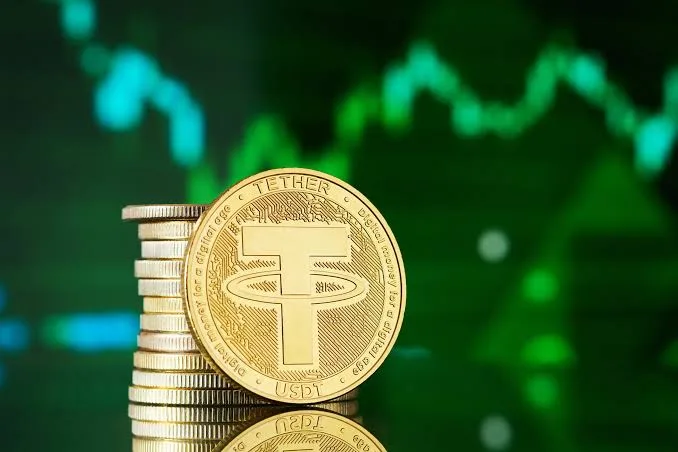
Tether CEO Paolo Ardoino says USDT is “coming home” to Bitcoin, highlighting an effort to bring the world’s largest stablecoin back to the blockchain on which it was originally launched more than a decade ago. “USDT on Bitcoin. It’s coming home,” Ardoino wrote on X on September 24, responding to Utexo co-founder Viktor Ihnatiuk.
Ihnatiuk said he had spent an evening in Washington discussing USDT on Bitcoin with representatives of Morgan Stanley and that the conversation included Utexo working with the bank on USDT adoption. However, neither Morgan Stanley nor Tether has announced a formal partnership arising from those discussions, making the distinction between talks and an agreed commercial deployment important. The comment nevertheless reinforces a strategy Tether has been pursuing for more than a year: making USDT usable natively across modern Bitcoin infrastructure rather than relying predominantly on networks such as Tron and Ethereum.
USDT Returns to Its Original Blockchain
The “coming home” description reflects USDT’s history. Tether first launched its dollar-backed token in 2014 on Bitcoin using the Omni Layer, originally under the name Realcoin. As alternative smart-contract networks developed, however, stablecoin activity shifted away from Bitcoin. Tether has since been building several routes back. In January 2025, Tether and Lightning Labs announced plans to integrate USDT with Bitcoin and the Lightning Network using the Taproot Assets protocol. The objective was to combine Bitcoin settlement with Lightning’s faster, lower-cost payment infrastructure, targeting use cases including remittances, micropayments and cross-border transfers. Tether added another route in August 2025 when it announced plans to launch USDT on RGB, a protocol designed for issuing assets directly on Bitcoin.
RGB allows assets to be held and transferred alongside Bitcoin while using a client-side validation architecture intended to provide greater privacy and scalability. Tether said the integration would eventually allow users to hold BTC and USDT within the same wallet and make payments without moving stablecoin activity onto a separate blockchain. Utexo has subsequently been developing infrastructure around RGB, Bitcoin and Lightning aimed specifically at enabling USDT payments.
Tether Deepens Its Bitcoin Infrastructure Bet
The initiative is part of a broader push by Tether into Bitcoin rather than an isolated stablecoin integration. Tether has invested in Bitcoin mining infrastructure, committed portions of its operating profits to purchasing BTC and funded companies developing Bitcoin-based payment and settlement technology. Earlier in 2026, Tether invested in Ark Labs, whose Arkade infrastructure is designed to support scalable financial applications on Bitcoin. Ardoino said at the time that “stablecoins were born on Bitcoin” and that expanding USDT access on the network remained a priority. Tether has also backed Lightning-focused payments company Speed, leading an $8 million strategic investment aimed at expanding stablecoin-powered payments using Bitcoin’s Lightning infrastructure.
The larger question is whether Bitcoin can regain a meaningful share of stablecoin activity. Stablecoins have become one of crypto’s largest practical applications, but most dollar-token settlement developed on programmable blockchains offering cheaper transactions and easier integration with decentralized applications. RGB, Lightning and related technologies are attempting to change that equation by adding scalable asset issuance and payments without requiring users to leave the Bitcoin ecosystem. Ardoino’s September 24 statement does not announce a launch date, nor does the Morgan Stanley discussion confirm institutional adoption.
But “coming home” captures Tether’s direction clearly: after USDT spent most of its growth years expanding beyond Bitcoin, Tether is increasingly investing in infrastructure designed to make the original blockchain a viable stablecoin settlement and payments network again.