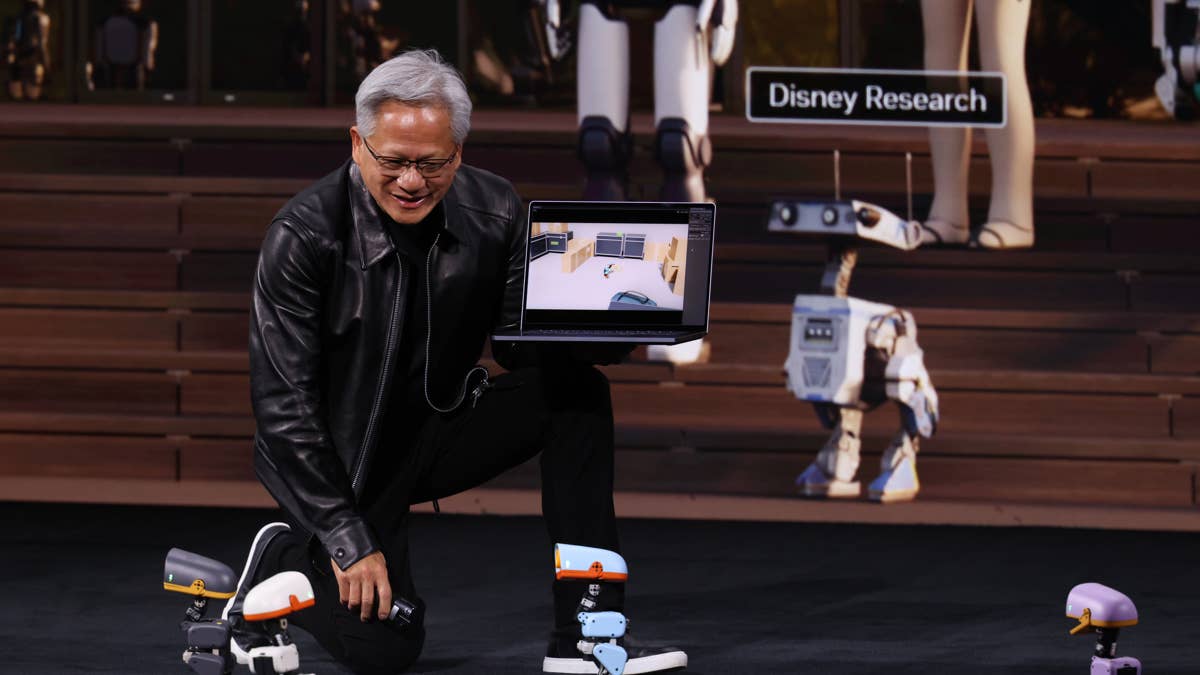
Jensen Huang spent more than three decades building Nvidia. By the time he left, he appeared to have little fight left.
Bloomberg reported that Huang looked “broken and shattered” in his final hours as chief executive. His usual insistence on controlling the details had gone. According to a person familiar with the situation, he had begun saying “whatever” and “I don’t care.”
Nvidia announced his resignation on Nov. 12 and named Chief Financial Officer Colette Kress interim CEO. Huang also left the board, ending his formal leadership of the company he co-founded in 1993.
For those who are hoping Huang might eventually return, Steve Jobs offers a precedent.
Jobs left Apple in 1985 after losing a power struggle with CEO John Sculley. The board sided with Sculley, stripping Jobs of operating authority. He later returned through Apple’s acquisition of NeXT and became interim CEO in 1997.
But the reasons for their departures are very different.
Jobs lost a fight over how Apple should be run. Huang’s resignation followed disclosures of extramarital relationships and questions about his involvement with a woman who’s a suspected spy for China. Days later, it was reported that he also had affairs with Nvidia employees, which led to his ouster.
Jobs was also just 30 when he left Apple. Huang is now 63. A return on Jobs’s roughly 12-year timetable would put him in his mid-70s.
Also read: CoreWeave stock sinks nearly 7% after Nvidia CEO Jensen Huang resigns
Age alone would not prevent a comeback. But the personal strain described in Bloomberg’s account gives little reason to assume Huang would want to repeat the struggle. People who had spoken with him said his attention had turned toward his wife and the damage to the women publicly linked to him. Still, that describes his current state of mind rather than a decision about the rest of his career.
What’s next for Jensen Huang
Leaving Nvidia will not end the questioning.
Three House committee chairs have requested that Huang appear for a closed-door, transcribed interview on Dec. 1, threatening a subpoena if he does not comply. Senate Banking Committee Chairman Tim Scott has separately asked him to testify. The requests concern national security and the protection of sensitive U.S. technology.
Huang has spent years cultivating access in both Washington and Beijing while arguing that American chipmakers needed to compete in China.
He repeatedly challenged U.S. export controls, the rules restricting sales of advanced chips overseas. In 2025, he called the restrictions a “failure,” arguing that they cost American companies business while encouraging Chinese customers to turn to domestic suppliers such as Huawei.
Those relationships gave Huang unusual access on both sides of an increasingly bitter technology rivalry. They now leave lawmakers with questions about his contacts and Nvidia’s safeguards.
Related: Cathie Wood buys $15.3 million of tumbling semiconductor stock
An earlier congressional exchange shows how questioning about a company’s Chinese ties can turn toward an executive’s citizenship and personal loyalties.
At a 2024 Senate hearing, Sen. Tom Cotton, R-Ark, repeatedly questioned TikTok CEO Shou Zi Chew about his nationality, passports, and connections to China.
“Have you ever been a member of the Chinese Communist Party?” Cotton asked.
“Senator, I’m Singaporean,” Chew replied.
Huang faces different allegations, and there is no basis to predict the same exchange. But his departure from Nvidia has done little to reduce Congress’s interest in hearing from him.
Nor have the espionage allegations been established. China has denied that Alice Huang is a spy, and Attorney General Todd Blanche said Nov. 12 that the Justice Department had not reached a conclusion on that question, Reuters reported.
Yorkville Ives managing partner Dan Ives maintained his Outperform rating on Nvidia, saying he was “not throwing in the white towel” on the stock at its current price.
Ives called Huang’s expected departure “a dark day for Nvidia and the US tech industry,” but said the U.S. still leads China in AI and other tech leaders will have to step up.
“Other US tech leaders are now going to have step in up even more as visionaries with Jensen gone, including Nadella, Sundar, Cook, Dario, Zuckerberg, Altman, Karp, Jassey, Su, Nikesh, Kurtz and many others,” Ives wrote.
Nvidia is set to report its fiscal third-quarter earnings on Nov. 17. The stock fell 4.34% to close at $166.19 on Nov. 12, bringing its year-to-date loss to over 10%.
Related: Billionaire Bill Ackman’s market warning resurfaces as stocks plunge