For months, the global oil market has been depleting the reserves that kept a major supply interruption from becoming a bigger disaster.
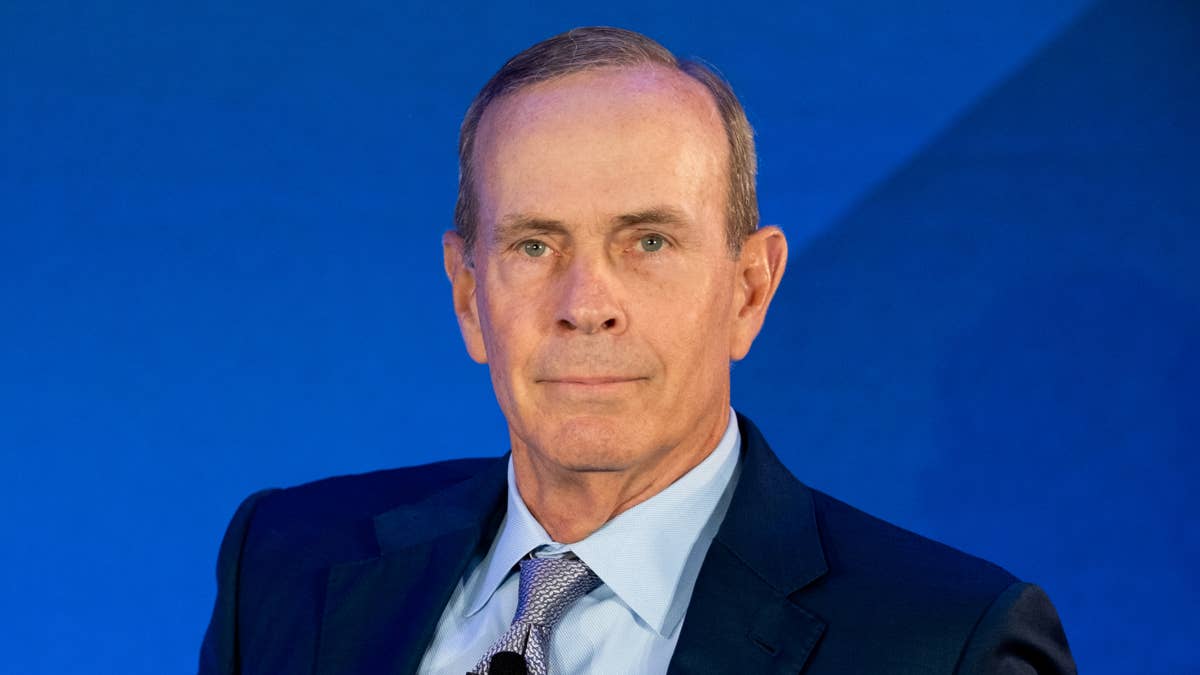
Chevron (CVX) CEO Mike Wirth says much of that cushion is now gone.
Commercial fuel inventories around the world have been declining for more than six months, while strategic crude reserves have limited room to provide additional relief, oil executives said, according to The Wall Street Journal.
Then another 2.5 million barrels a day basically vanished from an already tight market.
Attacks last week shut down a vital Saudi pipeline bypassing the Strait of Hormuz. As fighting resumes in the Middle East, ships and energy infrastructure face new threats.
Consumers are already feeling the effects. Retail diesel in the U.S. hit an all-time high of $6.23 per gallon, Alabama Daily News reported, while gasoline prices had returned to $4.32 after temporarily falling below $4 during the summer.
As the Trump administration describes the new setback as transitory, Wirth is explaining to investors why the oil sector is uncertain.
Chevron CEO says oil market buffers have largely disappeared
Wirth’s warning is most significant not because of where oil trades now, but because the market may lack the means to prevent prices from rising further.
When the Middle East crisis began, oil markets had many layers of insulation against a supply shock. Commercial inventory could have been pulled down. Governments might rely on strategic reserves. Other rudimentary means of transit may have provided some movement when the usual routes were interrupted.
Wirth says that advantage has diminished.
“Those have largely now played out,” Wirth said Friday, Sept. 11, at an energy conference in Austin, Texas, according to The Wall Street Journal.
The Chevron CEO added that the energy system doesn’t have nearly the buffers it had when the Middle East war began.
An oil market flush with stockpiles can handle a minor outage without requiring customers and refiners to instantly compete fiercely for replacement barrels, but a market working down its stockpiles has less flexibility.
Related: Chevron CEO evaluates new pipeline route around Strait of Hormuz
The new Saudi Arabian interruption illustrates this danger. Iraqi drone attacks closed a major pipeline that enables petroleum to circumvent the Strait of Hormuz, putting an estimated 2.5 million barrels per day in limbo, The Wall Street Journal reported.
Wirth’s view is not founded on the premise that such pressures would subside fast.
“It’s harder to envision a scenario where prices soften and quickly,” he said. Wirth believes the risks remain tilted toward higher prices over the next few months, according to Energy News Beat.
That’s a very different message than saying the new energy disruption just needs time to pass.
Consumers are already paying for the global fuel squeeze
Wirth’s physical-market pressure is already manifesting itself far from oil trading desks. U.S. retail diesel prices have soared to a record $6.23 per gallon, CBS News noted.
Gasoline, however, has returned to $4.32 a gallon after dipping below $4 this summer, according to CBS News. These figures transform an oil supply concern into a general economic challenge.
Diesel is essential to transportation and commerce. Higher fuel prices may impact trucking operations, agriculture, construction, and product shipments across the nation.
Gasoline has a more immediate impact on households. And unlike a shift in petroleum futures, customers face those expenses every time they fill up their tanks.
China is complicating the situation further. Chinese buyers have returned to buying more from overseas sources after months of depending mainly on local oil inventories, CNBC noted.
The earlier inventory draw had effectively reduced China’s immediate demand for barrels in the international market. That respite is dwindling as China returns to greater production.
Oil above $100 shows what investors are pricing in
Oil markets are already responding to the renewed supply concerns. Front-month Nymex crude for October delivery gained 1.3% on Monday, Sept. 14, to settle at $101.39 per barrel.
November Brent crude rose 1% to $105.68 per barrel, Morningstar confirmed. October Nymex natural gas climbed 2.3% to $2.896 per million British thermal units.
The moves came after further attacks on Saudi Arabian energy infrastructure and ships in the Middle East.
But the session also showed just how swiftly geopolitical events can drive oil prices in either direction. Crude retreated from previous highs after President Donald Trump said Ukraine and Russia had agreed to cease attacking each other’s energy installations.
That might alleviate one source of pressure on global energy infrastructure. But neither nation has verified compliance with the agreement on its own.
Ukrainian President Volodymyr Zelenskyy said Ukraine would suspend its strikes if its partners could guarantee that Russia stops attacking Ukraine’s electricity system and other critical infrastructure.
He also questioned whether Russia would follow through.
So traders face two geopolitical threats at the same time. Any real decline in strikes on Russian and Ukrainian energy sites would improve the prospects for supplies, while escalation in the Middle East might have the opposite effect.
The mathematics behind Wirth’s thesis may mean more to investors than attempting to predict the next global news.
The Saudi pipeline outage has put around 2.5 million barrels per day in limbo, The Wall Street Journal reported.
Commercial fuel stocks have been falling for more than half a year already, and the industry’s ability to rely on strategic reserves has deteriorated.
So, oil prices greater than $100 may happen against an entirely different physical background than one where stockpiles are abundant.
Chevron warning reaches far beyond energy stocks
Higher oil prices may help upstream profits and cash flow for Chevron stockholders. For most of the rest of the economy, the equation might seem quite different.
Oil prices and gasoline prices are rising, driving up transportation costs, stretching family budgets, and raising costs for enterprises that rely on freight and logistics.
That may turn into an inflation concern later. And inflation is especially relevant today, since energy costs are tied to interest rates.
If rising gasoline prices translate into sustained inflation, the Fed has another factor to consider when evaluating how tight monetary policy must be.
That means Wirth’s warning might extend beyond Chevron and other oil producers to airlines, transportation businesses, retailers, and other sectors sensitive to gasoline and financing prices.
That’s a critical difference for Chevron stockholders as well. Higher crude prices may be good news for an integrated oil company, but devastating upheaval to the energy system is not always a complete positive.
Chevron is itself part of the global system being disrupted. Geopolitical instability may influence shipping, infrastructure, project planning, and the wider economy, which ultimately affects demand for energy.
The important issue for investors is not merely whether oil can rise higher. They also need to consider whether there is enough slack in global-market spare capacity, inventories, and infrastructural flexibility to prevent the next interruption from being even worse.
Wirth’s reply is more circumspect. The oil market has already been whittling away some of the barriers that safeguarded it at the start of the Middle East crisis.
Now a key Saudi pipeline has been interrupted. China has been back in foreign markets more aggressively. U.S. customers are paying record costs for fuel. And oil has risen back over $100 per barrel.
None of that guarantees another surge in oil prices. Supply could recover. Geopolitical tensions could ease. Demand could weaken.
But Wirth’s warning identifies what has changed underneath those possibilities.
Related: Chevron stock turns heads as company strikes fresh oil