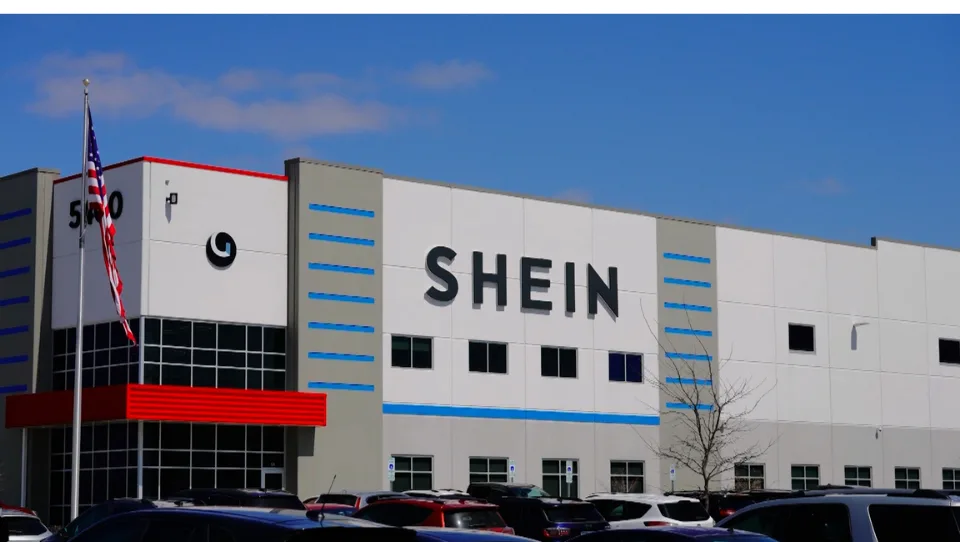
SHEIN Global Holdings shares fell as much as 10% on their first day of trading in Hong Kong on Tuesday, dropping from a HK$48.56 open to an intraday low near HK$43.70 before recovering to around HK$46.56, still about 4% below where they started. The IPO had priced at HK$48.56, below the HK$49.50 top of its marketed range, so the debut decline took the stock below an already reduced offer price.
The listing valued SHEIN at about $26.5 billion, roughly a quarter of the nearly $100 billion private investors assigned it in 2022. This is a trade-policy story with a live share price attached. SHEIN’s business held up over the past four years while the regulatory arbitrage its valuation was built on came apart, chiefly the US duty exemption that let it ship low-value parcels from China tariff-free.
SHEIN opened at HK$48.56, fell to an intraday low near HK$43.70, then recovered to consolidate around HK$46. Source: TradingViewWhat Happened on the Hong Kong Debut
SHEIN priced its offering at HK$48.56 a share, below the HK$49.50 ceiling of its range, selling about 280 million Class B shares to raise HK$13.6 billion, or roughly $1.74 billion, according to CNBC. That set the valuation near $26.5 billion.
The shares dropped once trading opened, reaching an intraday low around HK$43.70, about 10% below the debut price. They later recovered and consolidated mainly between HK$45.70 and HK$46.40 before edging up to around HK$46.56, leaving the stock about 4% below where it started. The weakness was flagged in advance: in gray-market trading the day before, shares changed hands more than 10% below the offer price at Futu, Bright Smart and Phillip Securities, Quartz reported. The level is live and moving as this publishes.
Investor Takeaway
The headline haircut came from trade policy. SHEIN listed at $26.5 billion versus nearly $100 billion in 2022, a cut of more than 70% that traces to the loss of the US de minimis exemption, while the business itself kept operating throughout.
The Valuation Arc: About $100 Billion to $26.5 Billion
SHEIN’s price tag has fallen in stages. It reached about $98.2 billion in a 2022 funding round, then $66 billion in 2023, and now $26.5 billion at listing, a decline of more than 70% from the peak.
SHEIN’s valuation fell from about $98 billion in 2022 to $26.5 billion at its Hong Kong IPO. Data: company filings · Chart: FinanceFeedsThe lower price tracks a clear decline in the financials. Revenue growth slowed to 8% in 2025 from 20.7% the year before, and to just 1.1% in the first quarter of 2026, when net revenue rose from $9.0 billion to $9.1 billion. Full-year 2025 net income fell 38.7% to about $2.06 billion, SHEIN’s prospectus shows. In the first quarter of 2026 the company swung to a $99 million net loss from a $395 million profit a year earlier.
De Minimis, Tariffs, and the Growth Slowdown
SHEIN ties its slowdown to the removal of the US de minimis exemption, which had allowed packages under $800 to enter the country duty-free, and to the European Union‘s scrapping of a similar EUR 150 exemption. In the prospectus, SHEIN states that after those changes it “adopted formal customs clearance procedures” along with price increases and localized inventory and lists the removal of such exemptions as a risk that “may materially and adversely affect our business.”
Chinese-origin goods shipped to the US now face duty rates that SHEIN says range from 10% to 87.5%, and US revenue fell 14.3% in the first quarter as a result, per a Reuters account. The US, about 29.4% of revenue in 2023, has shrunk to 22.5% of quarterly sales, and the operating margin slipped to 2.9% from 3.9%. SHEIN also ties part of its first-half 2026 weakness to war-related freight and oil costs, so several forces are at work. The duty change is the structural one, and Europe, its largest market, faces the same pressure next.
Why New York and London Never Happened, and What the Listing Signals
Hong Kong was SHEIN’s third choice. The company spent years pursuing a New York listing, then London, before both were effectively blocked by Chinese regulators amid Western scrutiny of its labor and sourcing practices. China’s securities regulator approved the Hong Kong route in July.
The structure of the deal explains much of the debut weakness. Only about 5% of the stock is freely tradeable, cornerstone investors including Tencent and Boyu Capital took roughly a fifth and are locked up for six months, and SHEIN has agreed to pay about $3.5 billion in cash to early preferred shareholders who bought in at higher valuations.
As Momentum Works chief executive Jianggan Li put it, “This IPO is not just a fundraising event, it is also, and probably more of, a capital-structure event.” Analysts were blunt on timing. Rayliant Global Advisors’ Phillip Wool said SHEIN had “missed the window” as investor enthusiasm rotated toward AI, and told CNBC that even at the reduced valuation “it’s still not exactly cheap.”
For the Hong Kong market, the listing is a test of whether the city’s IPO window can absorb a large, politically complicated cross-border name after New York and London would not. The debut suggests investors are now pricing the trade-policy risk directly and no longer paying up for past growth.
Investor Takeaway
Europe is the next front: the EU scrapped its own low-value exemption, and SHEIN warns the impact “could be generally in line with or exceed” the US hit to its largest market.