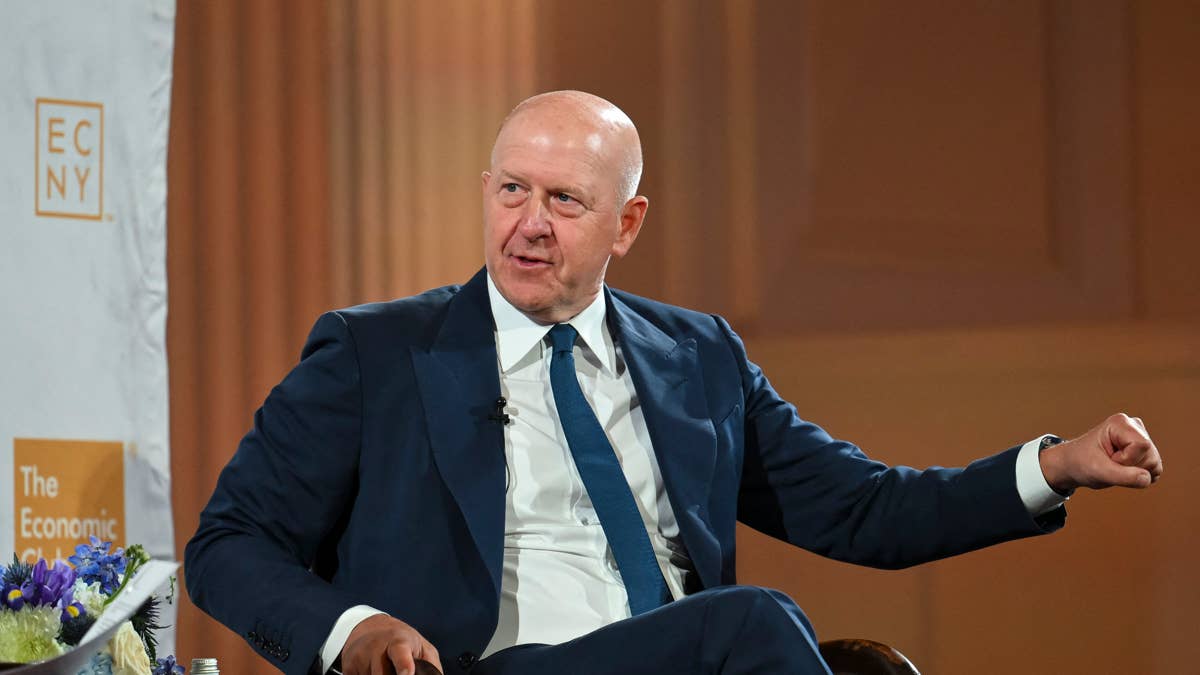
Treasury Secretary Scott Bessent moved fast to calm the bond market this month. Two of the biggest names on Wall Street just moved just as fast to say it probably will not be enough. A rebuttal that landed within days of his own announcement.
The pushback lands at an awkward moment for Bessent. The national debt just hit a fresh milestone and a closely watched Federal Reserve speech is only days away. Both developments raise the stakes for whatever the Treasury decides to do next.
Goldman Sachs and Wells Fargo doubt the buyback plan
Interest rate strategists at Goldman Sachs and Wells Fargo both said the Treasury Department’s expanded bond buybacks will do little to reverse the recent jump in long-term yields. Rates on 10- and 30-year Treasuries briefly dropped after the announcement, then rose again, erasing much of the initial relief, Bloomberg reported.
Goldman Sachs strategists George Cole and William Marshall wrote in an August 21 research note that the buyback expansion “does not address what we see as the main sources of recent long-end volatility.” They added that the buybacks are “unlikely to meaningfully reset rate levels even if scaled up.”
Wells Fargo strategists led by Erik Nelson made a similar case in their own August 21 note, arguing that lowering long-end yields would require macroeconomic shifts rather than Treasury market operations. They pointed to a slowdown in growth and inflation, less uncertainty around Federal Reserve policy, fiscal consolidation, or a decline in investment-grade corporate bond issuance as the kinds of catalysts actually needed to move yields lower.
More Goldman Sachs:
- Goldman Sachs sees writing on the wall for Eli Lilly stock
- Goldman Sachs doubles down on oil price forecast for 2026
- Goldman Sachs gives major reset to YETI Holdings stock target
Wells Fargo Investment Institute co-head of global fixed income Luis Alvarado offered a blunter version of the same warning, saying the Treasury’s move should provide only “short-term relief” since the underlying drivers behind higher yields remain firmly in place. “So until investors gain greater clarity on those big issues, not the little Band-Aid that was put on today, the risks to long-term trends still remain skewed to the upside,” he told Reuters.
JPMorgan Chase senior research analyst Maia Crook wrote in a client note that the interventions “belie the underlying structural challenges and do nothing to address them.” She warned that higher risk premia may prove the more durable consequence if investors see the Treasury moving away from regular and predictable issuance.
Why Bessent doubled down on Treasury buybacks
The skepticism follows a genuinely aggressive move from Treasury. On August 19, the department said it would at least double the size of its liquidity-support buybacks for 10- to 30-year debt, raising the per-operation cap from $2 billion to at least $4 billion. The Treasury had previously doubled the frequency from two to four operations per quarter, TheStreet reported.
Bessent made the move after the 30-year Treasury yield hit 5.34% on August 18, its highest level in 19 years. Long yields initially fell nine basis points on the announcement and stocks rallied, but by August 20 nearly all of that reaction had unwound, according to CNBC.
Bessent has insisted he still has room to act further. He has referenced having a “big toolkit” at his disposal and may draw on the Treasury General Account, which holds a substantial cash reserve, to buy securities outright. Not everyone views that additional firepower as reassuring. JPMorgan’s rates team has warned that a surprise intervention from the Treasury’s long-standing commitment to regular and predictable debt management could actually raise the term premium investors demand, rather than lower it.
Angela/Getty Images
The debt numbers behind Wall Street’s skepticism
The scale mismatch is central to Wall Street’s doubts. The Treasury market is worth roughly $32 trillion, making a doubling of buybacks to $4 billion per operation close to negligible against the overall size of the market.
That mismatch looks even starker against the backdrop of the national debt itself. Outstanding public debt crossed $40 trillion on August 18, the same day the buyback announcement landed, a milestone reached roughly four and a half years after debt first topped $30 trillion, according to TheStreet.
Analysts have also flagged a structural wrinkle in how the buybacks actually work. Treasury is repurchasing longer-duration bonds while simultaneously issuing more shorter-dated bills. A swap that eases near-term pressure on the long end without reducing the government’s overall debt load.
Societe Generale, Deutsche Bank and Scotiabank strategists have all raised concerns about continued pressure on longer-dated yields, leaving the yield curve vulnerable to further steepening. That steepening pressure has already shown up in how long-dated Treasury yields have traded since the announcement.
What this means for the Treasury’s next move
For the Treasury, the episode highlights a tension between tactical market intervention and the deeper fiscal picture driving yields higher in the first place. Evercore ISI analysts have praised Bessent’s tactical skill as an activist Treasury secretary, even while questioning whether the relief can last given what they call a coming tidal wave of maturing debt and deficits.
The timing puts extra weight on Federal Reserve Chairman Kevin Warsh’s keynote address at Jackson Hole on August 28. With the debt now above $40 trillion, investors are watching for any signal on whether the Fed sees itself sharing responsibility with Treasury for managing long-term borrowing costs.
Goldman, Wells Fargo, JPMorgan, Societe Generale, Deutsche Bank, Scotiabank. The list of firms saying the same thing keeps getting longer. Buybacks buy time. They do not fix a deficit. They do not fix inflation. And until one of those actually improves, the pressure on long-end yields is not going anywhere.
Related: Scott Bessent just made a bold move on the bond market