If you’ve filled up a gas tank lately, bought groceries, or just paid attention to your monthly budget, you already know that consumers are stretched. The data are catching up to what people have been feeling for months.
Walmart (WMT) reported fiscal Q2 2027 earnings on Aug. 20 that beat Wall Street’s revenue estimates. But then, it watched its stock drop by almost a double-digit percentage. The culprit wasn’t the headline numbers.
It was the detail underneath: U.S. comparable store sales grew just 2.6%, well below the 3.8% Wall Street expected, according to Reuters. That miss, combined with cautious forward guidance, was enough to unsettle a market that had priced Walmart for stronger momentum.
CFO John David Rainey didn’t sugarcoat the consumer environment when he appeared on CNBC’s “Squawk on the Street.”
“Consumers are still spending, and real wage growth is keeping pace,” Rainey told CNBC. “But all that said, we would love to be able to bring prices down more and see less pressure on their wallets.”
The good news, for shoppers at least, is that Walmart has a $2.9 billion tool to do exactly that.
Also Read: History of Walmart: Company timeline & facts
How Walmart plans to use its $2.9 billion tariff refund
Here’s the part of the story that matters most for everyday Walmart shoppers. The company received approximately $2.9 billion in International Emergency Economic Powers Act (IEEPA) tariff refunds during Q2, according to the earnings call.
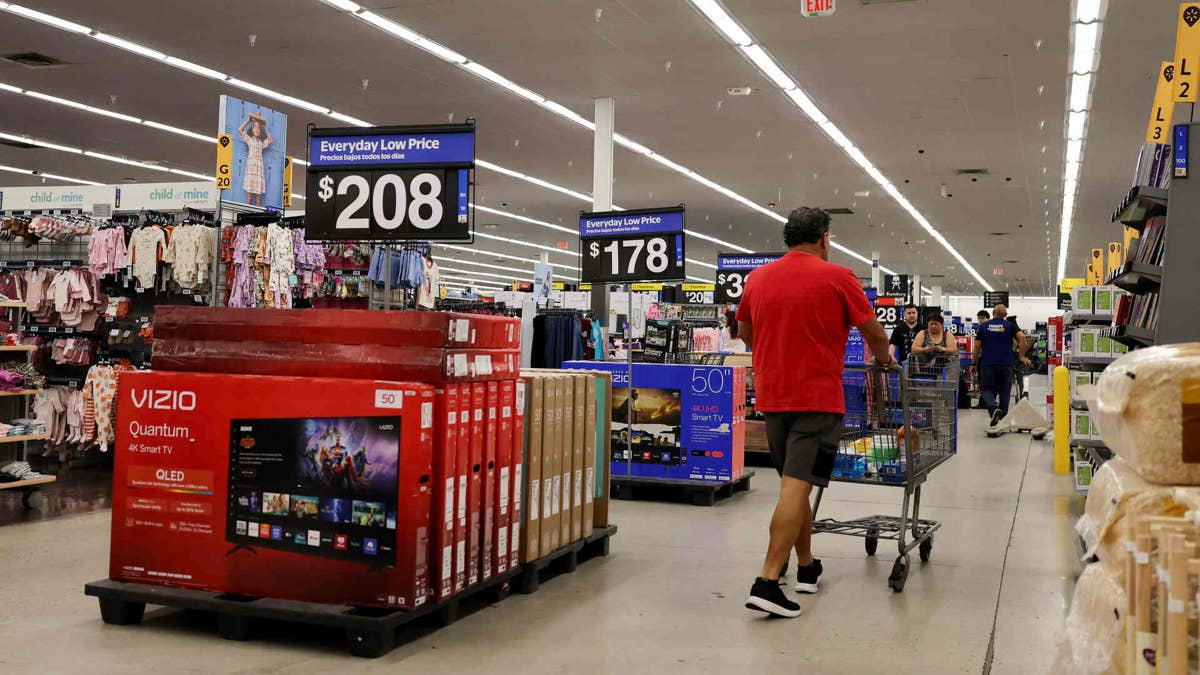
Rather than pocketing the windfall, Walmart is deploying it directly into lower prices.
Rainey told CNBC the impact will be visible in Q3. Walmart already increased price rollbacks to more than 11,000 items in Q2, up from 7,200 at the end of Q1, according to Walmart’s Earnings call insights.
CEO John Furner actually said it on the earnings call.
Our intent was to deploy much of that back into price, and that's what we're doing.
The tariff refund contributed roughly 750 basis points to Q2 operating income growth, lifting reported operating income growth to 28.8%, according to Walmart’s Q2 statement.
Gross profit rate expanded to 25.4% for the quarter. Yes, those are strong numbers, but they came with an asterisk that the market didn’t love.
Strip out the tariff benefit, and the underlying operating income growth was at the top end of guidance — solid, but not spectacular.
A CNN report shows that the broader context is that the U.S. government is processing an estimated $168 billion in tariff refunds across approximately 330,000 businesses.
Walmart’s $2.9 billion slice is among the largest. The decision to pass it through to consumers rather than preserve it in margins reflects the competitive reality Walmart faces right now.
The fuel cost headwind is complicating the Walmart pricing picture
Walmart’s pricing generosity comes with a significant offset.
The company now expects to incur more than $2 billion in incremental fuel-related costs for its fleet and supply chain distribution throughout fiscal year 2027, according to Rainey’s comments on the earnings call and earnings statement.
More Walmart:
- BofA points to crucial Walmart numbers most investors ignore
- Walmart, Costco, and CVS have a new way to bring you back
- Kroger makes a pricing move that Costco and Walmart will love
That $2 billion figure matters for two reasons.
- It directly pressures the gross margin expansion that the tariff refund helped create.
- It reflects a broader consumer dynamic that’s weighing on Walmart’s traffic patterns.
Higher gas prices are hitting lower-income shoppers particularly hard. Rainey noted on CNBC that Walmart continues to see consumers stretched thin, especially around fuel costs.
Walmart is lowering prices across categories, including beef, to help offset that pressure. Meanwhile, Walmart’s largest market-share gains this quarter came from higher-income consumers, according to Rainey.
That’s a signal that value-seeking behavior is spreading further up the income ladder. My read on this is that the fuel-cost headwind and the tariff-refund investment are essentially working against each other in the short term.
Walmart is spending its windfall to attract and retain shoppers who are simultaneously being squeezed by costs outside Walmart’s control.
The numbers show Walmart’s flywheel is still turning
Despite the comparable sales miss and the stock sell-off, several underlying metrics point to a business with genuine structural momentum.
Key Walmart Q2 FY2027 highlights:
- Total revenue of $187.94 billion, up 5.9% year over year (YoY).
- Global e-commerce sales are up 23%, with U.S. e-commerce up 24%.
- Marketplace grew 52%, and advertising revenue grew 38% globally.
- Membership fee revenue grew 17%, hitting an all-time high.
- Sam’s Club U.S. net sales of $25.7 billion, up 8.8% YoY.
- Source: Walmart Q2 Fiscal 2026 Results & earnings call
Fast delivery in the U.S. grew 48% for the quarter, according to Furner’s earnings call remarks. Walmart also announced a prepared food partnership with Subway and completed the acquisition of Vibe to boost its advertising capabilities.
These aren’t defensive moves. They’re the continuing buildout of what I’ve previously described as Walmart’s e-commerce flywheel. That’s the self-reinforcing loop where delivery, marketplace, advertising, and membership all compound together.
Walmart also raised its full-year FY2027 guidance following the quarter. Net sales growth is now expected to be between 4% and 5%, up from the prior 3.5-4.5% range.
Adjusted EPS guidance was raised to $2.80 to $2.87, from $2.75 to $2.85, according to the Q2 earnings statement.
Also Read: Walmart Inc. Latest News and Stories
For shoppers, the message from the earnings is that Walmart is actively choosing to pass savings through to the shelf rather than protect its margins.
The $2.9 billion tariff refund is here, the rollbacks are expanding, and you are likely to feel it in Q3. For investors, it remains to be seen whether that’s enough to reignite comparable sales growth and calm a nervous stock market.
Related: Is Walmart a good long-term investment? Its buy-and-hold prospects explained